
-
 Success-Addict
- 3 Min Read
The South African National Anthem: Full Official Lyrics (2026)
The South African national anthem is more than just a song—it’s a powerful symbol of unity, history, and national pride. Unlike most countries that have a single-language anthem, South Africa’s anthem is unique because it combines multiple languages, reflecting the country’s rich cultural diversity.
Adopted after the end of apartheid, the anthem represents a new South Africa—one built on freedom, reconciliation, and inclusivity.
In this guide, we’ll explore the meaning behind the anthem and provide the full official lyrics as recognized in 2026.
What Makes the South African National Anthem Unique?
The South African National Anthem is one of the few national anthems in the world that blends multiple languages into one composition.
Languages Included:
- Xhosa
- Zulu
- Sesotho
- Afrikaans
- English
It combines parts of two historical songs:
- Nkosi Sikelel’ iAfrika
- Die Stem van Suid-Afrika
This fusion symbolizes the country’s journey from division to unity.
Full Official Lyrics of the South African National Anthem
Verse 1 (Xhosa & Zulu)
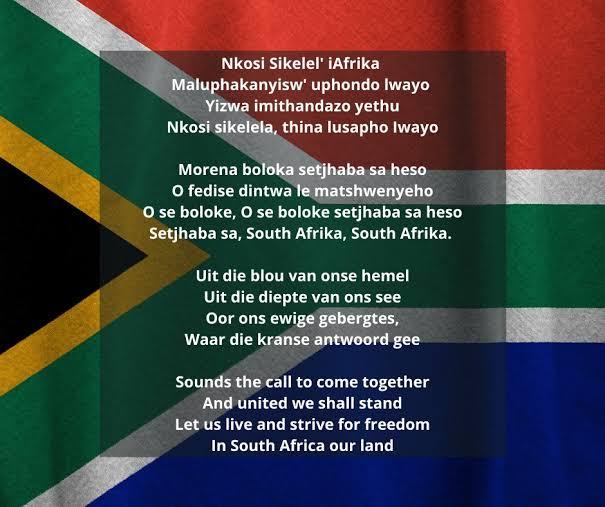
Nkosi sikelel' iAfrika
Maluphakanyisw' uphondo lwayo
Yizwa imithandazo yethu
Nkosi sikelela, thina lusapho lwayo
Verse 2 (Sesotho)
Morena boloka setjhaba sa heso
O fedise dintwa le matshwenyeho
O se boloke, O se boloke setjhaba sa heso
Setjhaba sa South Afrika – South Afrika
Verse 3 (Afrikaans)
Uit die blou van onse hemel
Uit die diepte van ons see
Oor ons ewige gebergtes
Waar die kranse antwoord gee
Verse 4 (English)
Sounds the call to come together
And united we shall stand
Let us live and strive for freedom
In South Africa our land
Meaning Behind the Anthem
Each part of the anthem carries deep meaning:
1. Prayer for Blessing
The opening lines ask God to bless Africa and its people.
2. Call for Peace
It emphasizes ending conflict and building harmony.
3. Celebration of Nature
The Afrikaans verse reflects South Africa’s landscapes and beauty.
4. Unity and Freedom
The English verse focuses on togetherness and national progress.
Historical Background
- Nkosi Sikelel’ iAfrika was originally composed in 1897
- It became a symbol of resistance during apartheid
- After 1994, it was combined with Die Stem
- Officially adopted as the national anthem in 1997
This combination represents both the past and the future of South Africa.
Why the Anthem Matters Today
The anthem continues to play an important role in:
- National events and celebrations
- Schools and public institutions
- Sports events (especially rugby and football)
- Promoting unity across cultures
It reminds South Africans of their shared identity and collective future.
Tips for Learning the Anthem
1. Learn Line by Line
Break it into sections by language.
2. Practice Pronunciation
Focus on correct pronunciation for each language.
3. Listen to Official Versions
Hearing it regularly helps with memorization.
4. Understand the Meaning
Knowing what the words mean makes it easier to remember.
Common Questions About the Anthem
1. Why does South Africa have multiple languages in its anthem?
To reflect the country’s cultural diversity and promote unity.
2. When was the current anthem adopted?
In 1997, after the end of apartheid.
3. What does “Nkosi Sikelel’ iAfrika” mean?
“God bless Africa.”
4. Is the anthem sung fully at events?
Often a shortened version is used depending on the occasion.
5. How many languages are in the anthem?
Five languages are included.
Conclusion
The South African national anthem is one of the most meaningful and unique in the world. By blending languages, cultures, and history, it tells the story of a nation that has overcome division and continues to strive for unity.
More than just lyrics, it’s a symbol of hope, resilience, and national pride.
Whether sung at school, during sports, or at national events, the anthem reminds every South African of one simple truth:
👉 Unity in diversity is the country’s greatest strength.
FAQs
1. What is the name of the South African national anthem?
It is commonly referred to as “Nkosi Sikelel’ iAfrika,” combined with parts of “Die Stem.”
2. How many languages are used in the anthem?
Five: Xhosa, Zulu, Sesotho, Afrikaans, and English.
3. Who wrote the original anthem?
Nkosi Sikelel’ iAfrika was composed by Enoch Sontonga.
4. Why is the anthem important?
It represents unity, freedom, and the country’s history.
5. Can foreigners learn the anthem?
Yes, anyone can learn it—it’s a symbol of national pride.