
-
 Infinity Media
- 6 Min Read
How To Open A First Bank Of Nigeria Bank Account: A Step-By-Step Guide | Infinity Media
Opening your first bank account with First Bank of Nigeria is an important financial milestone. Whether you are starting your financial journey, planning to save and grow your money, or looking for a reliable account to receive your salary or business payments, FirstBank offers a wide range of account options and flexible ways to get started.
One of the biggest advantages of banking with First Bank is convenience. You can open an account by visiting a branch, using your mobile phone through USSD, registering online, or even through authorized agents. In this detailed guide, you’ll learn everything you need to know about how to open a First Bank of Nigeria account, including account types, requirements, step-by-step processes, helpful tips, and answers to common questions.
Why Choose First Bank of Nigeria?
First Bank of Nigeria Limited, popularly known as FirstBank, is one of the oldest and most respected financial institutions in the country. With over a century of experience, the bank has built a strong reputation for reliability, innovation, and customer trust.
FirstBank is widely known for its extensive branch network across Nigeria, making it easy to access banking services almost anywhere. Beyond physical branches, the bank has also invested heavily in digital banking, offering mobile apps, USSD banking, internet banking, and agent banking services. This combination of tradition and technology makes FirstBank suitable for students, salary earners, business owners, retirees, and Nigerians living abroad.
Whether you want a basic savings account, a student-friendly account, a current account for business transactions, or a foreign currency domiciliary account, FirstBank provides options designed to meet different financial needs.
Step 1: Decide the Type of Account You Want
Before opening a First Bank account, the first thing you should do is decide which type of account suits your needs. This choice determines the documents you’ll provide, the minimum balance, and how you can use the account.
1. Savings Accounts
Savings accounts are ideal for individuals who want to save money while earning interest. They are suitable for students, salary earners, and everyday banking.
Common savings account options include:
-
FirstSavings Plus
-
FirstInstant Account
-
KidsFirst Account (for minors)
-
XploreFirst Account (for students and young adults)
These accounts usually have lower transaction limits and are designed to encourage saving.
2. Current Accounts
Current accounts are best for individuals and businesses that carry out frequent transactions. They are commonly used by entrepreneurs, freelancers, and companies.
Current accounts usually allow higher transaction volumes and may come with cheque books and overdraft options.
3. Domiciliary Accounts
A domiciliary account allows you to hold and transact in foreign currencies such as US dollars (USD), British pounds (GBP), and euros (EUR). This account type is ideal for people who earn in foreign currency, receive international payments, or travel frequently.
4. Special Accounts
FirstBank also offers special accounts such as:
-
Student and youth accounts
-
Accounts for minors
-
Diaspora accounts for Nigerians living abroad
Each of these accounts is designed with specific benefits and requirements to suit different groups of people.
Step 2: Gather the Required Documents
The documents required to open a First Bank account depend on the type of account you choose. However, there are standard documents commonly requested for most accounts.
Common Requirements
✔ Valid Means of Identification
You will need at least one government-issued ID, such as:
-
Nigerian International Passport
-
National Identity Card
-
Driver’s License
-
Permanent Voter’s Card
✔ Passport-Sized Photographs
Most account types require two recent passport photographs.
✔ Proof of Address
This can be a recent utility bill, tenancy agreement, or bank statement that shows your residential address.
✔ Account Opening Form and Signature Specimen
You’ll be required to fill out an account opening form and provide a specimen signature, either online or at the branch.
✔ References (When Required)
Some account types, especially certain savings and current accounts, may require one or two references who already have bank accounts.
Special Requirements for Minors and Students
For minors and students, documents such as a student ID card, birth certificate, and parental or guardian consent may be accepted.
Requirements for Diaspora Accounts
If you are opening a FirstBank account from abroad, you may be required to provide:
-
Proof of foreign address
-
Valid identification
-
Passport photographs
-
Bank Verification Number (BVN)
-
References from Nigerian account holders
Step 3: Choose How You Want to Open the Account
One of the strengths of FirstBank is the variety of account opening options available.
1. Opening an Account at a Branch
This is the traditional method and remains popular.
Steps:
-
Visit the nearest FirstBank branch with your documents.
-
Request an account opening form from customer service.
-
Fill in your details and sign the specimen signature card.
-
Submit your documents for verification.
-
Make any required initial deposit.
-
Once approved, your account number will be issued.
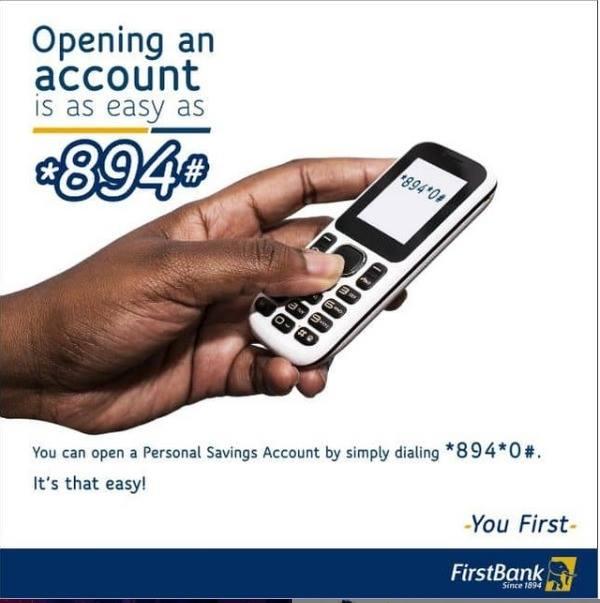
*2. Opening an Account Using USSD (894#)
You can open a First Bank account using your mobile phone without internet access.
Steps:
-
Dial *894# on your phone.
-
Select the option to open an account.
-
Enter your personal details as requested.
-
Once completed, your account number will be sent to you via SMS.
This method is fast, simple, and ideal for people in areas with limited internet access.
3. Opening an Account via FirstMobile App or Online
FirstBank also allows account opening through:
-
The FirstMobile app
-
Online account opening platforms where you can submit your details digitally
This option is convenient for people who prefer digital banking.
4. Opening an Account Through FirstMonie Agents
Authorized FirstMonie agents across Nigeria can help you open an account, especially in areas without easy access to bank branches. The agent registers your details and your account number is sent to your phone.
Step 4: Complete Verification and Set Up Banking Tools
After your account has been created, there are a few important steps to complete.
Enroll for BVN
The Bank Verification Number (BVN) is mandatory for all Nigerian bank accounts. It links your biometric information to your bank account and helps prevent fraud.
Collect and Activate Your Debit Card
You can collect your ATM card from the branch or receive it later, depending on the account type.
Register for Digital Banking
You should activate:
-
Mobile banking
-
Internet banking
-
USSD banking
These tools allow you to transfer money, pay bills, buy airtime, and manage your account easily.
Step 5: Understand Minimum Balances and Fees
Each FirstBank account type comes with its own minimum balance and maintenance fees.
-
Some entry-level savings accounts require little or no initial deposit.
-
Other accounts may require references and a higher minimum balance.
Always confirm the minimum balance and charges with a bank representative before opening the account.
Tips for a Smooth Account Opening Process
-
Ensure all your documents are original and valid.
-
Make sure your names match across all documents.
-
Use a phone number registered in your name for easy banking access.
-
Be patient, especially if additional verification is required.
Frequently Asked Questions (FAQs)
Can I open a First Bank account without visiting a branch?
Yes. You can open an account using USSD, mobile banking, online platforms, or agent banking.
Is BVN compulsory?
Yes. BVN is required to fully activate and operate your account.
Can minors open a First Bank account?
Yes. There are special accounts designed for minors with parental or guardian consent.
Can Nigerians abroad open a FirstBank account?
Yes. Diaspora accounts are available for Nigerians living outside the country.
Conclusion
Opening a First Bank of Nigeria account is a smart step toward financial stability and independence. With multiple account options and flexible opening methods, FirstBank makes banking accessible to almost everyone.
By choosing the right account type, preparing the necessary documents, and completing your BVN and digital banking setup, you’ll be well on your way to enjoying seamless banking services. Once your account is active, you can save, transact, receive payments, and manage your finances with ease.
Your journey to better financial management can start today with First Bank of Nigeria.
honour2
Jan 13, 2026 | 05:45 PMKeep up the good work, I h Dey feel you brother